E*TRADE · CASE STUDY
Customer service intranet
Bringing several customer-service systems together in one web-based platform.
Context
E*TRADE’s customer service teams relied on several backend systems for account servicing, research and other daily work.
Agents often had to move between separate tools while helping customers in real time.
Constraints
- Multiple backend systems with different structures and data
- Large and growing set of service workflows
- Call center use under time pressure
- Product, engineering and operations stakeholders
- Ongoing releases and expanding scope
The work
My role
I was the sole interaction designer for the platform. I worked with product owners, engineers and business teams to define requirements, organize complex workflows and design the new experience.
I created detailed wireframes and specifications that became the working reference for development and QA.
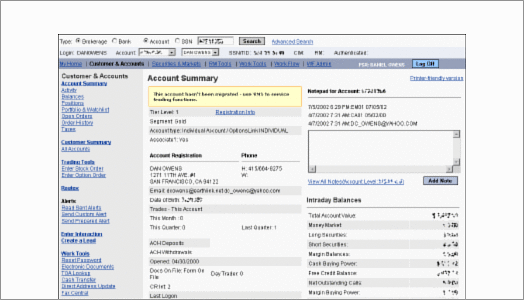
(Image blurred to protect proprietary information.)
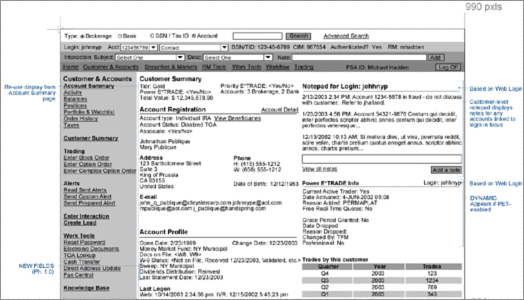
What changed
- Brought several service tools together under one navigation system
- Created common page structures for recurring customer-service tasks
- Created consistent layouts and interface patterns across dozens of screens
- Documented states, exceptions and workflow details for development and QA
Outcome
The new platform gave customer service teams one place to access information and tools that had previously lived in separate systems.
As the platform expanded, those wireframes and specifications helped keep product, engineering and QA working from the same design.
(Image blurred to protect proprietary information.)